
How to Help Your Anxious Child
As the government eases lockdown and the schools are getting ready to reopen for most pupils, many young people are excited to get back to see their friends. Some, especially those who faced such uncertainty over exams, might feel relief, keen to get back to learning and getting good teacher assessed grades.
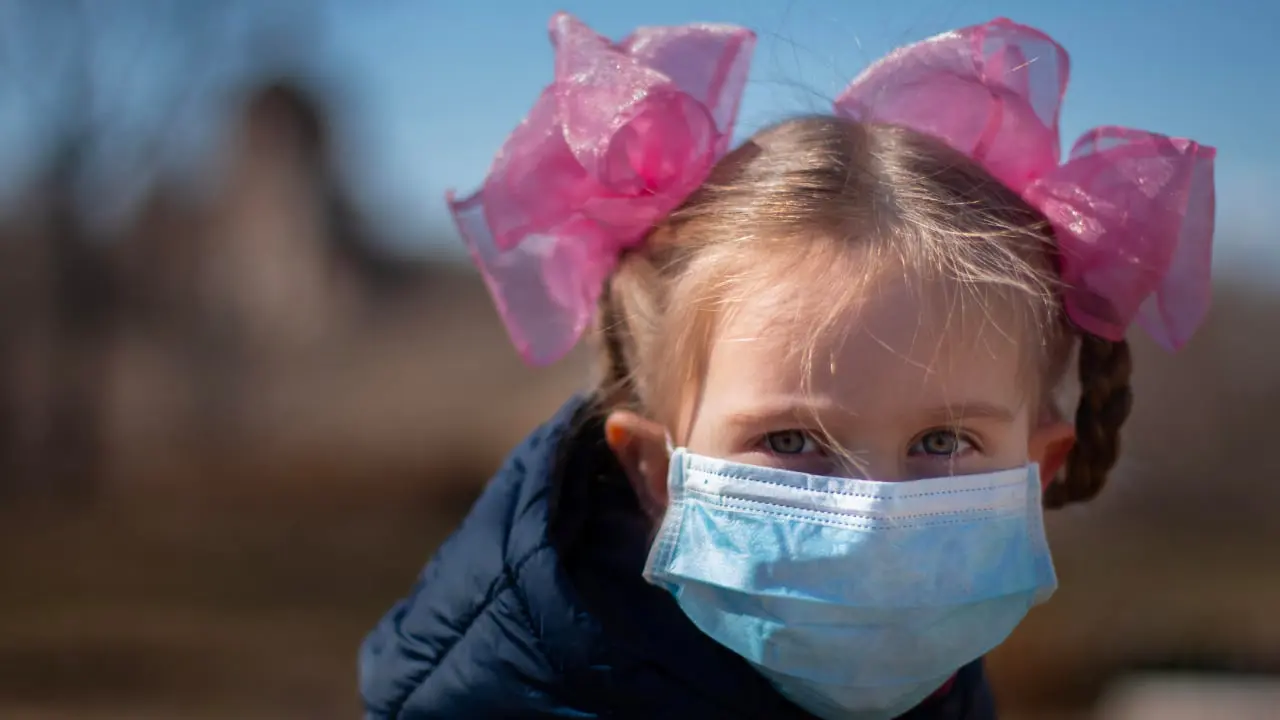
For many young people, though, the prospect of returning to school might carry a lot of fear and anxiety, too. Some might have social anxiety, very possibly made worse by the long period of social isolation we have all endured. Others could be more concerned about how much schooling they have lost, worrying that they won’t be able to catch up, fearing being left behind. Some younger children might face separation anxiety, too, having spent so much time at home with the primary case-givers.
A recent survey published by NHS Digital (2020) suggests that as many as one in six children aged 5-16 have a probable mental disorder, rising to more than 1 in 4 for girls aged 17-22. Many of these young people reported that lockdown had made their lives worse.
What Happens When We Are Anxious
When you get anxious, your body prepares to defend you or get you out of (what it sees as) a dangerous situation. Your heart starts to beat faster, and you might start sweating, even if you feel cold. Your breathing becomes fast and shallow, and your digestion becomes slower. You might feel nauseous or need to empty your bladder or bowels. These responses can help you face physical danger, but they are not so good at helping you go back to school.
5 Top Tips to Help Your Anxious Child
1. Control your breathing
We have already seen how stress and anxiety lead to fast, shallow breathing, and that’s bad news. But, the good news is that deliberately showing and deepening your breathing has the opposite effect: it slows your heart rate and reduces anxiety. One of the easiest ways to learn deep breathing is to place one hand on your chest and the other on your tummy, then breathe normally. Which hand moves more as you breathe?
Many people find that the hand on their chest moves more, suggesting that they are breathing quite shallowly. Try to breathe so that your chest stays more or less still while your tummy expands and shrinks with each breath. While belly breathing can feel odd at first, it’s a natural way to breathe. Just watch a baby: their chests hardly move, all their breath comes from the belly.
Now, slow your breathing down. Breathe in for a count of 4-5; hold your breath briefly, then breathe out for a count of 5-7. As you take slow, deep breaths, your body will relax. It can be challenging to do at first but stick with it. It works, I promise!
You might also find apps such as Smiling Mind (iOS and Android) or Breath (Apple Watch) helpful in learning to control your breathing.
2. Learn to Tap
Emotional Freedom Techniques (EFT, or tapping) provides a fantastic self-help strategy you can use to calm yourself and help with many other things. We have an EFT Self-Help handout elsewhere on the site, which will take you through the basics of tapping. There are also excellent videos on YouTube by Gary Craig, who pioneered EFT. He also provides free instruction on his website, emofree.com.
There is a free app, The Tapping Solution, available for both iOS and Android, which takes you through tapping basics, including tapping for anxiety.
3. Talking about it
Fear and anxiety are normal and healthy responses to the things we perceive as threatening. They help keep us safe. Talking about our fears and concerns can help normalise them, reducing their impact. Please encourage your child to talk about their fears without judgement or ridicule. Even if the things they fear seem trivial or implausible to you, they are very real to them. Hearing their fears while providing support and gentle encouragement can help your child feel safe.
4. Mindfulness-Based Stress Reduction
Recent research has shown Mindfulness-Based Stress Reduction (MBSR) to be highly effective in helping young people manage anxiety.
David Potter provides an excellent 8-week course on MBSR at palousemindfulness.com, which he offers free of charge. While an 8-week course requires some commitment, there are some quick wins, too, including this 20-minute body-scan meditation.
Apps such as Calm, Smiling Mind and Insight Timer also offer many meditations and relaxations suitable for use with children, young people and adults.
5. Consider professional help
Most of the time, self-help strategies such as those outlined above can be all that is needed to help your child through this challenging back-to-school transition. However, if your child is still distressed or seems to show other signs of poor mental health, don’t delay seeking professional help. It is much easier to support someone who shows early signs of psychological distress than it is to help a person with more deeply entrenched difficulties. Your child’s school might be able to offer some support, as might your GP.
Getting Further Help
If you feel that it would help talk with a mental health professional, you are welcome to contact us. We could help support you as you support your child, or it might be appropriate for them to see someone themselves.
Sources:
Vizard, T., Sadler, K., Ford, T., Newlove-Delgado, T., McManus, S., Marcheselli, F., Davis, J., Williams, T., Leach, C., Mandalia, D. & Cartwright, C. (2020). Mental Health of Children and Young People in England. NHS Digital.
Zaccaro, A., Piarulli, A., Laurino, M., Garbella, E., Menicucci, D., Neri, B., & Gemignani, A. (2018). How Breath-Control Can Change Your Life: A Systematic Review on Psycho-Physiological Correlates of Slow Breathing. Frontiers in Human Neuroscience, 12, 353. https://doi.org/10.3389/fnhum.2018.00353
Zhoua, X., Guoa, J., Lu, J., Chena, C., Xiec, Z. Liud, J., & Zhanga, C. (2020). Effects of mindfulness-based stress reduction on anxiety symptoms in young people: A systematic review and meta-analysis. Psychiatry Research, 289. https://doi.org/10.1016/j.psychres.2020.113002




0 Comments